





Trusted by:
Grid modeling-only platforms
Site selection-only platforms
Grid
Mapped, consultant-grade interconnection studies
Substation buses: injection capacity and offtake capacity (power)
Transmission lines: injection capacity and offtake capacity (power)
Allocated upgrade costs
Dynamic analysis by project size (MW) & upgrade budget
Market
Historical LMPs
Node-to-hub basis risk analysis
Detailed historical nodal price breakdown (12x24s)
Land
Automated, configurable parcel search & site selection
Zoning & permitting
Industry-leading GIS data library: pipelines, fiber routes, data center locations, water, and hundreds more
PV Design
Initial PV layout generation
Direct integration with PVcase Ground Mount
Our users are done with manual work. Are you?

Control your pipeline. Leverage a single source of truth.
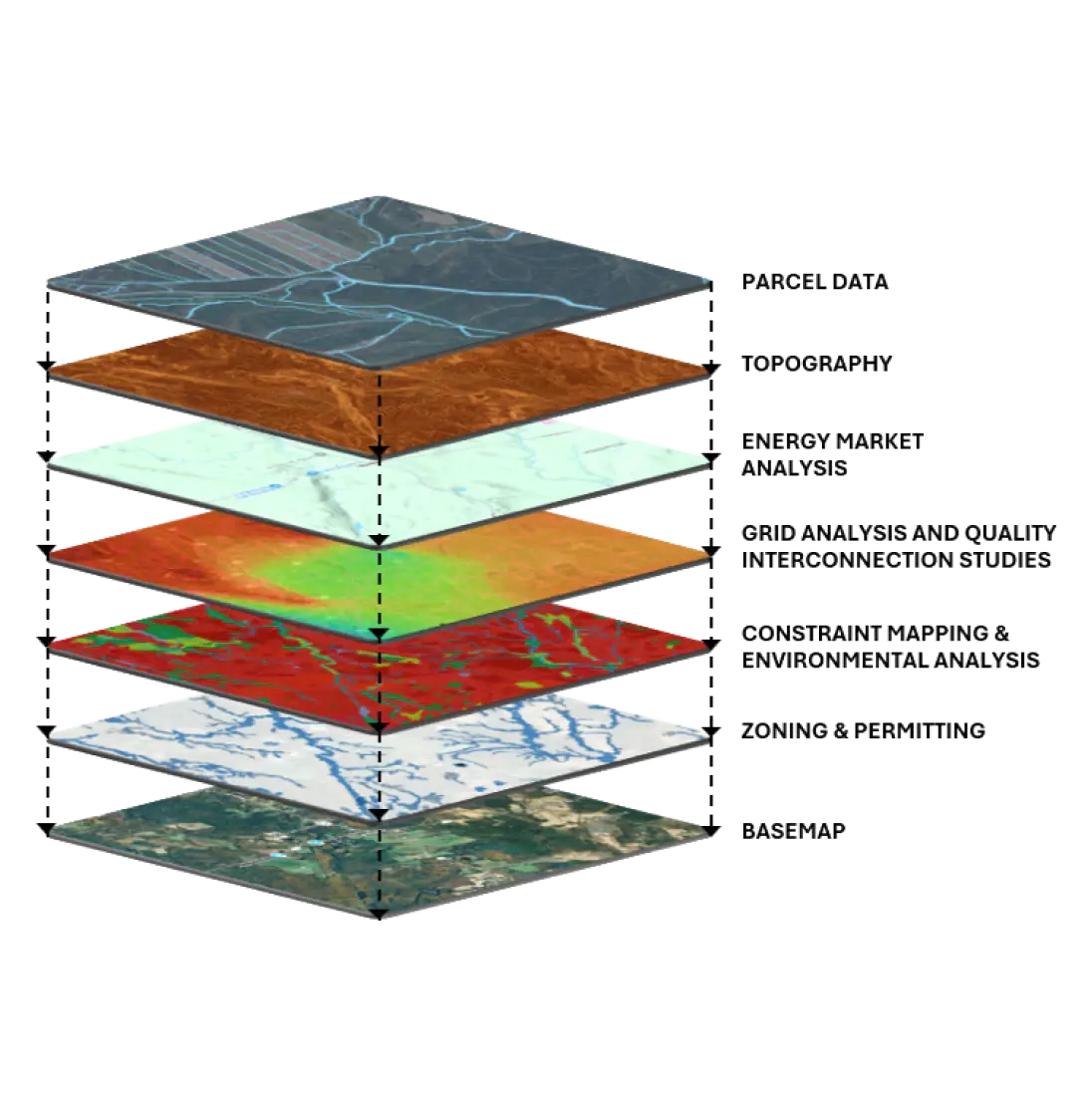
You can't scale a pipeline when interconnection studies, energy markets analysis, and land feasibility don't connect. PVcase Prospect is the single, integrated workspace where grid, market, and land converge. Stop chasing dead-end projects and translate early-stage analysis into higher project win rates.
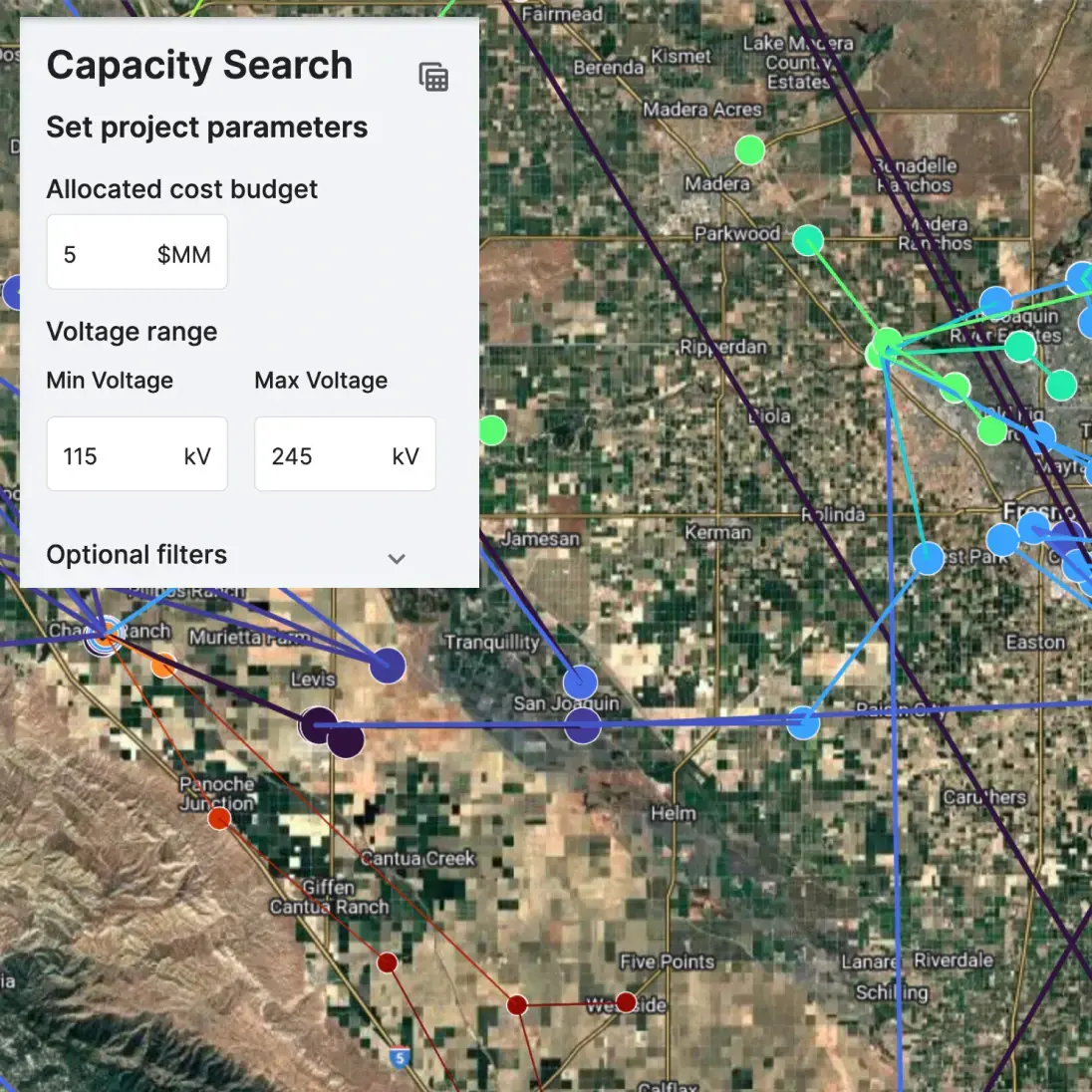
Find the right points of interconnection with enough capacity and within your upgrade budget.
Avoid interconnection surprises with instant access to nationwide, consultant-quality grid analysis with allocated upgrade costs. High-quality interconnection studies are natively integrated into PVcase Prospect, the industry-leading site selection solution, which combines market and land analysis for comprehensive end-to-end project development.
PVcase is the recognized leader in solar design software, posting high customer satisfaction scores on G2, a top software review platform.
The results speak for themselves:
![]() |
![]() |
Client experience
Dan Bramley
GIS and Siting Manager, CleanChoice Energy
Your next project starts here. Control your pipeline and enable long-term viability with PVcase Prospect.
Request a demoStandalone grid platforms provide high-quality interconnection studies and grid analysis on substation buses by running full power flow-based N-1 simulations modeled in line with each unique grid operator’s regional study practice.
However, while high-quality, that data is often siloed and geared towards a transmission/IX engineer audience, making it extremely challenging to join that analysis with the full development cycle and the entire project development team. Siloed systems and interconnection strategy then require extensive manual cross-referencing with separate tools for market feasibility and land evaluation. This just doesn’t work at scale.
PVcase Prospect is different. We natively integrate the same high quality, consultant-grade grid modeling (including injection/offtake capacity and allocated upgrade costs) directly into a platform with dynamic land and market analysis. This single-source-of-truth approach allows you to make holistic, de-risked decisions at scale, ensuring that you won’t sink months of time into a bad project only to end up with interconnection surprises once you evaluate the grid.
Yes, PVcase Prospect provides interconnection studies for transmission lines. In fact, we are the only software provider to offer the same high-quality modeling for transmission lines and not just substation buses. Many renewable energy and data center developers need to evaluate line capacity and upgrade costs since ideal land is already taken around good substations. This is why we put in the extra work to do the modeling for transmission lines, too.
We partner with an industry-leading power flow modeling consultant to run trusted, comprehensive grid studies to help you understand interconnection risk (and opportunity) instantly. We take the latest base case from the grid operator and then run full N-1 power flow-based studies that mimic the ISO/RTO process directly for each region using industry-standard modeling software. We include queue data, transmission upgrades, and retirements to help evaluate injection and withdrawal capacity, grid constraints, and allocated upgrade costs.
While there is no way to perfectly predict capacity, our rigorous modeling in-line with each grid operators’ unique methodology ensures that you get the best picture available at the very start so that you can proactively target POIs with sufficient capacity, understand what constraints that will trigger, and understand likely upgrade cost allocation to evaluate interconnection potential well in advance of entering the queue.
PVcase Prospect’s interconnection studies and grid analysis are specifically designed for utility-scale projects that require thorough and accurate grid modeling. This includes solar, wind, and battery energy storage systems (BESS), as well as data centers and other large energy consumers. By providing full modeling for both injection capacity (sometimes called ATC), offtake capacity (also known as available power or withdrawal capacity) and allocated upgrade costs, PVcase Prospect is ideally suited for any large-scale energy project where reliable grid integration and cost transparency are essential.
PVcase Prospect offers comprehensive nationwide coverage in the U.S., including both deregulated and regulated regions (including WECC, TVA, the Southeast, and other hard-to-obtain regions).
Yes, PVcase Prospect replaces disjointed tools and point solutions across the entire early-stage project development workflow. In fact, the most common reason developers and engineers choose PVcase Prospect is that they want an all-in-one solution for early-stage project development. Developers leveraging PVcase typically replace 3–5 siloed tools — including separate GIS/land tools, grid analysis providers (or consultants), market data, and early-stage layout tools.
Large load requests (think: hyperscale datacenters) are relatively new and only recently began growing at this frequency and magnitude. As a result, there are not yet standardized load queues — as there are for generation — and utilities/grid operators do not currently provide load queue information for analysis. No grid modeling provider is able to model large load queues since they don’t exist.
However, once a grid operator approves a large load interconnection, that load is included in the base cases for the relevant years and will factor into the power flow analysis to forecast future capacity. Grid operators study large load requests serially and independently, not simultaneously. Therefore, we mirror grid operator methodology and only include approved load connections in our studies to ensure that our studies mimic what you will get in the queue.
© 2025 PVcase